
Triage Care System
A patient to nurse communication system intended to increase triage efficiency, reduce nurse fatigue, and improve patient outcomes.
Project
4 weeks, individual
Work
Discovery research
Desk research
User experience design
Software
Adobe Suite
FigJam
Problem
Clinicians are stretched thin
Clinicians are often stretched thin in the workplace. One major cause is the increasing demand for healthcare services, as the population grows and ages. This leads to longer work hours and higher patient volumes, which can put a significant strain on clinicians. Additionally, healthcare systems are often underfunded, which can result in understaffing and inadequate resources, further exacerbating the workload for clinicians. All of these factors can contribute to burnout and mental health issues among clinicians, which can have negative impacts on patient care and outcomes.
How can we
take on the systematic strain on healthcare professionals in US hospitals, reduce burn-out, and ultimately improve patient outcomes?
Discovery research
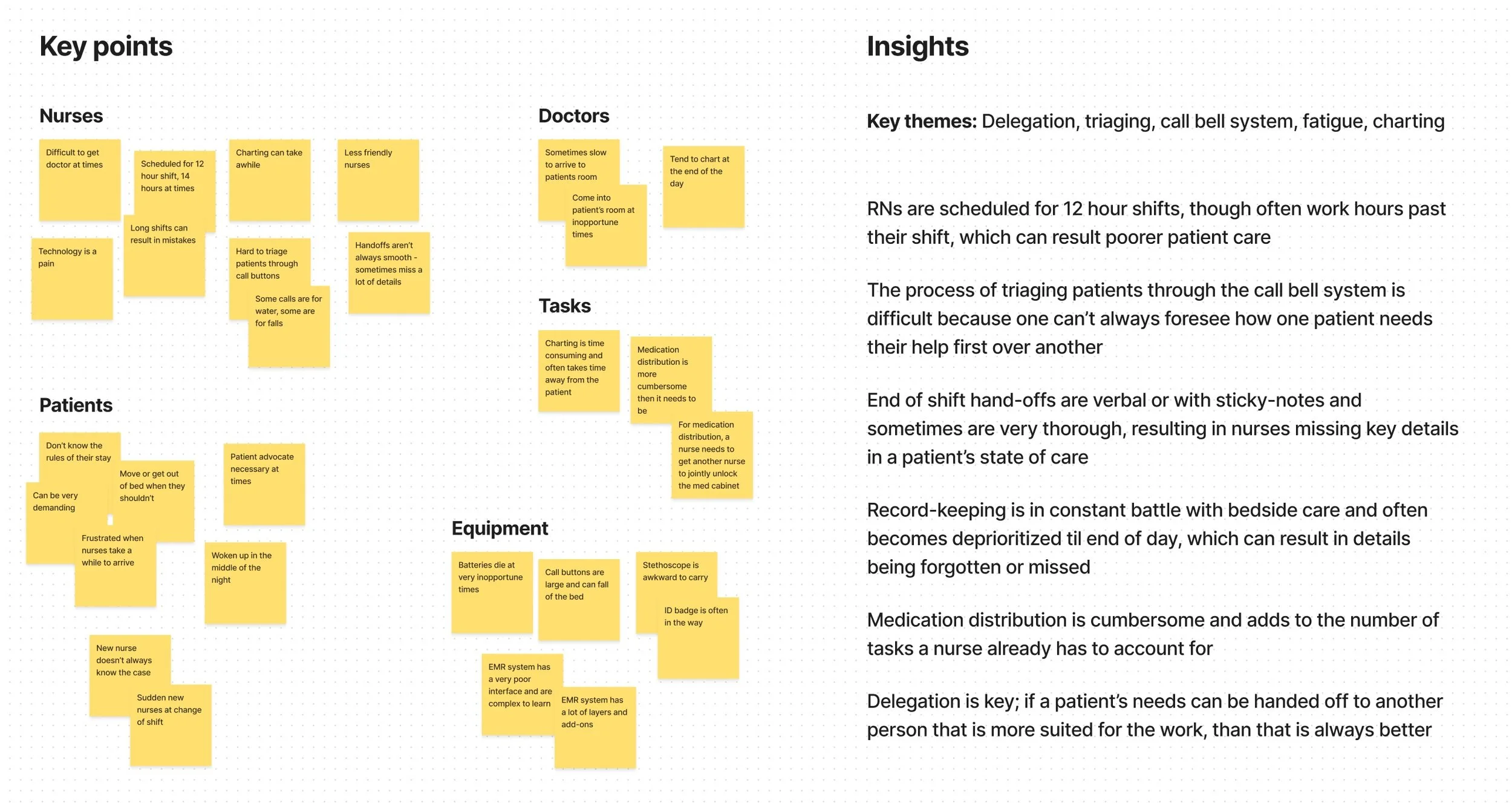
Conversational sessions with medical professionals across the US
When I lead these sessions, my main objective was to approach my research in a relaxed and conversational manner. I wanted to create a friendly environment, so I formulated a few questions to help guide the conversation and establish a focal point for the rest of the session. By doing so, I hoped to encourage a comfortable atmosphere that would allow for meaningful and productive discussions.
Ideation
An exploration of ideas
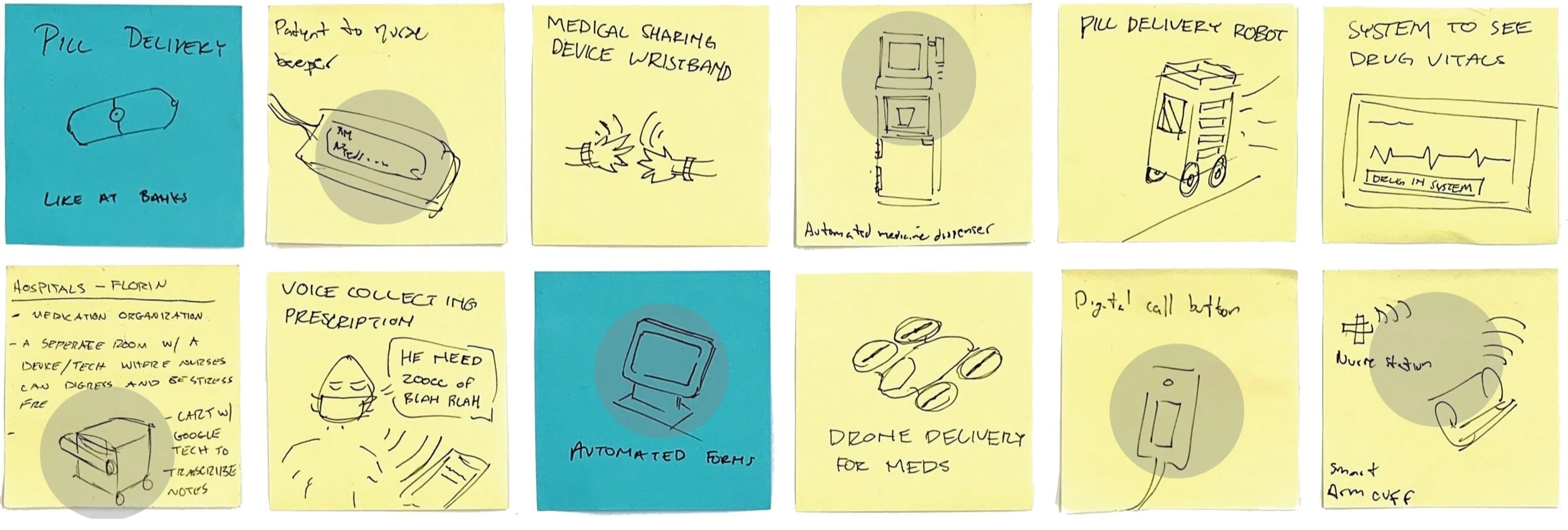
After conducting a series of conversational sessions and summarizing my findings, I begin to ideate on a slew of potential ideas on sticky notes. I then connected with some classmates to help me evaluate and refine some of these ideas. After this, I choose several ideas to refine into concepts: an electronic medicine dispenser, a patient to clinician communication device, a smart monitor, and a dictation to EMR recorder.
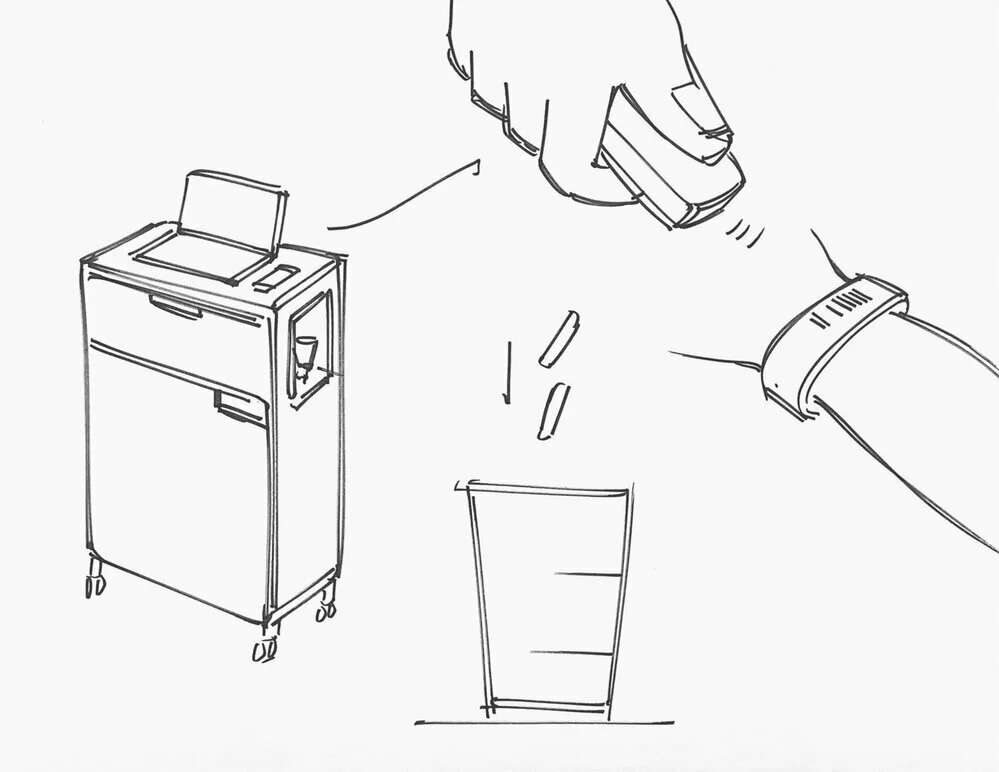
Electronic medicine dispenser
Intended to simplify medication distribution by allowing a clinician to scan a patient’s wrist band and dispense medication right from a vending machine cart.
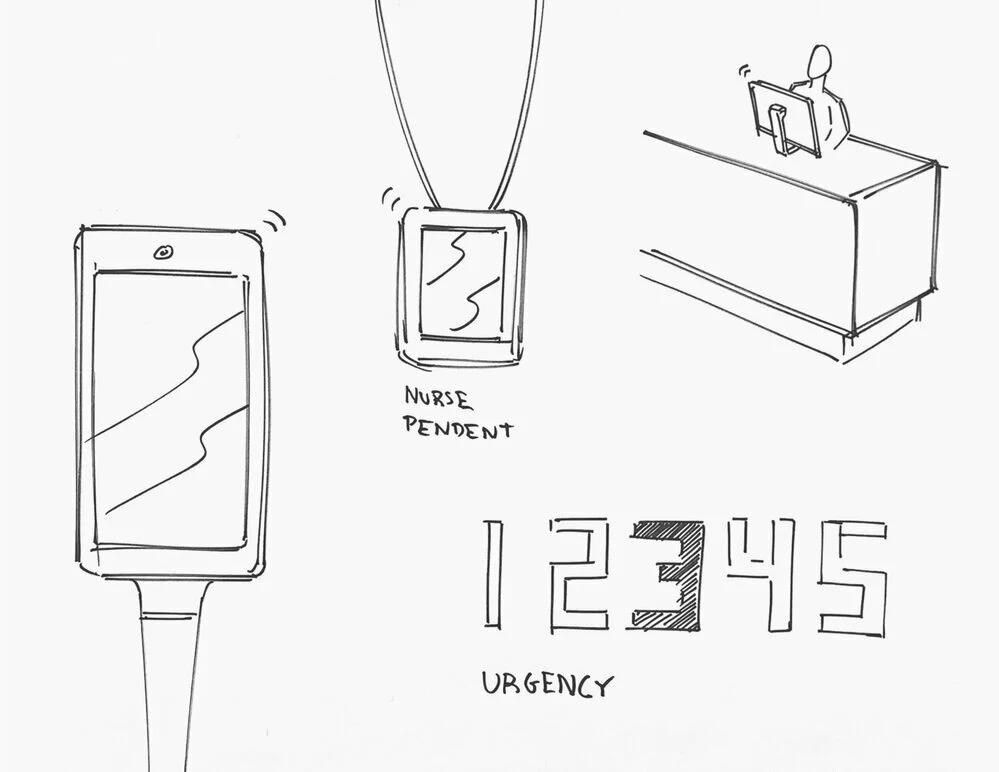
PT to clinician communicator
Intended to improve the current nurse call-button system by allowing a patient to send a message to a pendent that a clinic wears on their person.
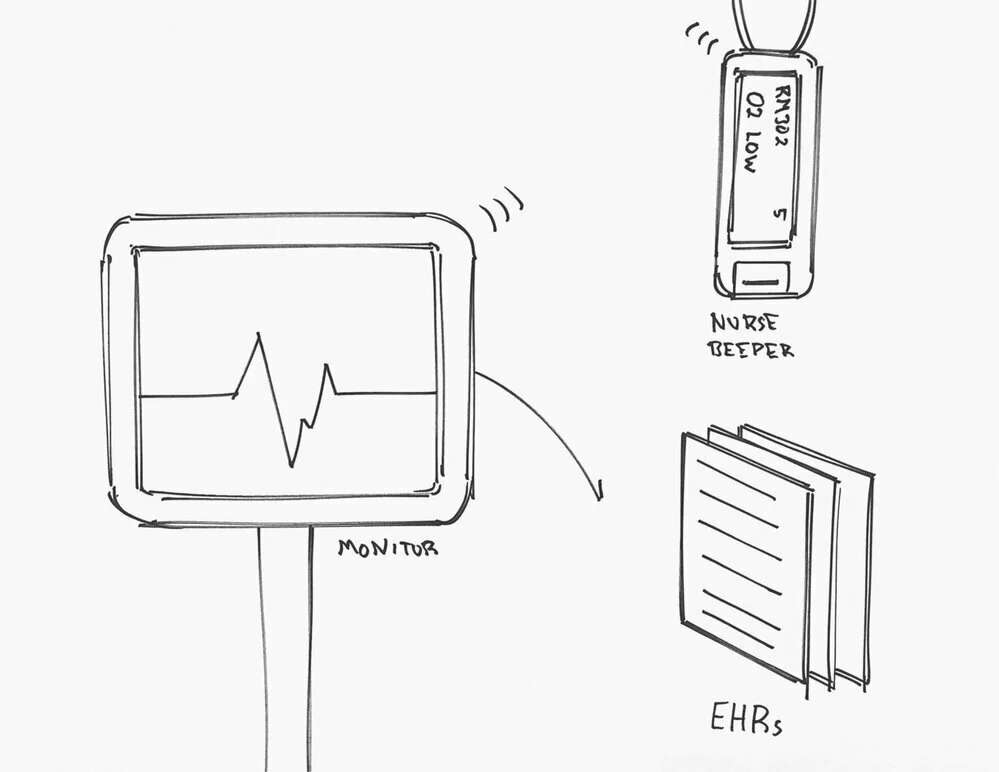
Smart monitor
Intended is to help doctors and nurses keep an active watch on their patient’s vital signs (HR, BP, BT, RR) on-the-go along with automated record-keeping to EMR.
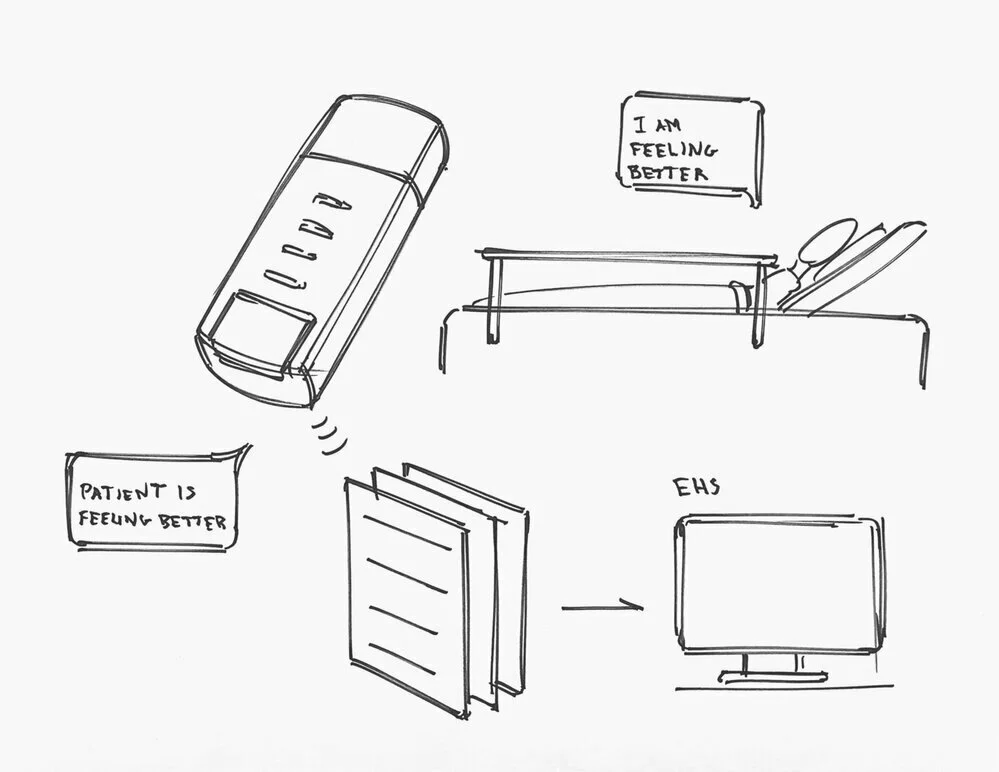
Dictation to EMR recorder
Intended to allow clinicians to dictate patient updates right at the bedside which addressing the constant back and fourth from a patient’s bedside to the computer to chart.
Direction
To explore a product system intended help clinicians triage their patients, delegate tasks, and ultimately improve patient outcomes
Question
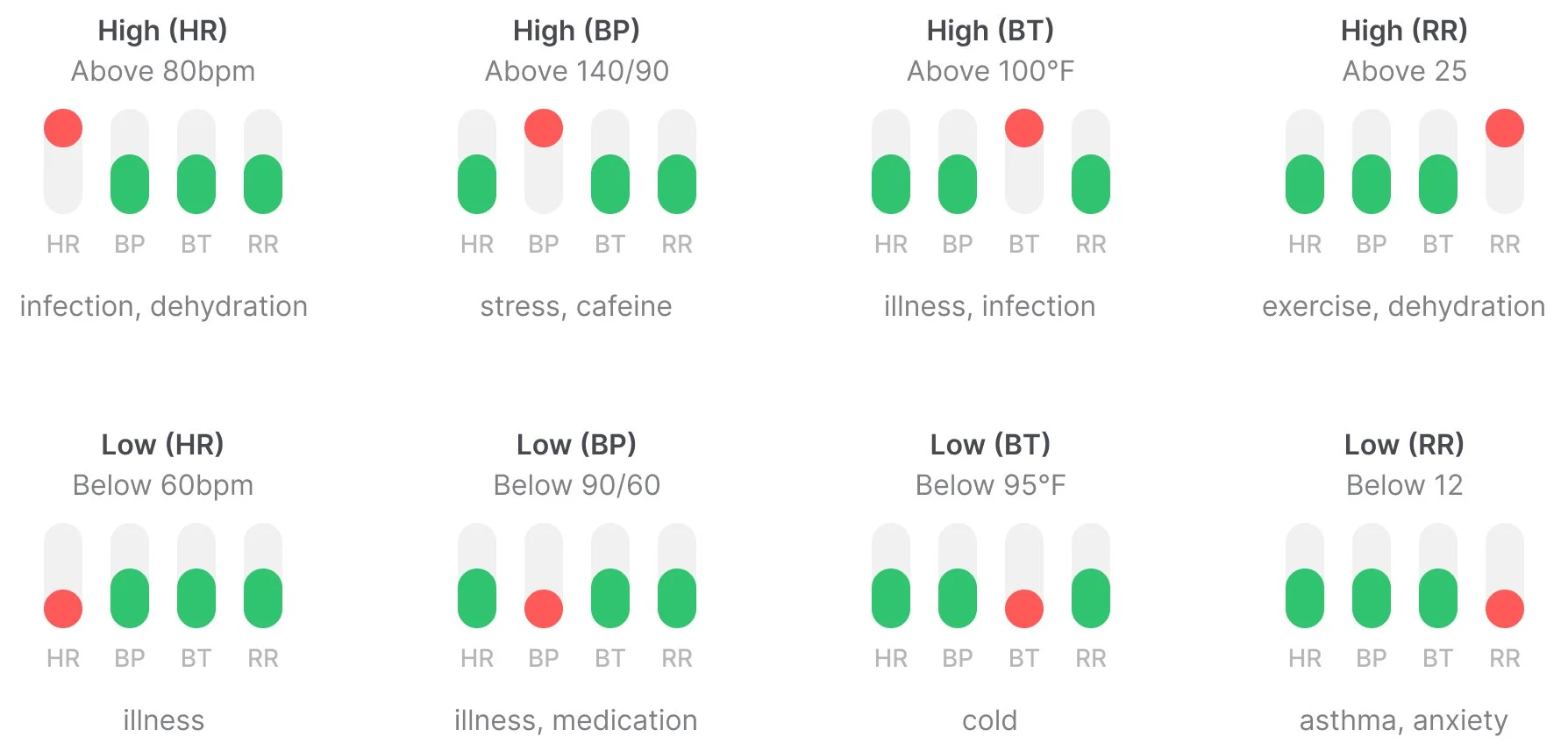
What can the four most common vital signs tell about a person’s general wellbeing?
As I was pursing a concept to help clinicians triage their patients, I wanted to see if there was a way for clinicians to generally know the wellbeing of their patients, from afar, to help them more accurately triage. As it turns out, there is. As depicted in the chart below, vital signs can indicate many conditions such as dehydration, infection, hypothermia, and more.
Design iteration
Define. Ideate. Refine. Repeat.
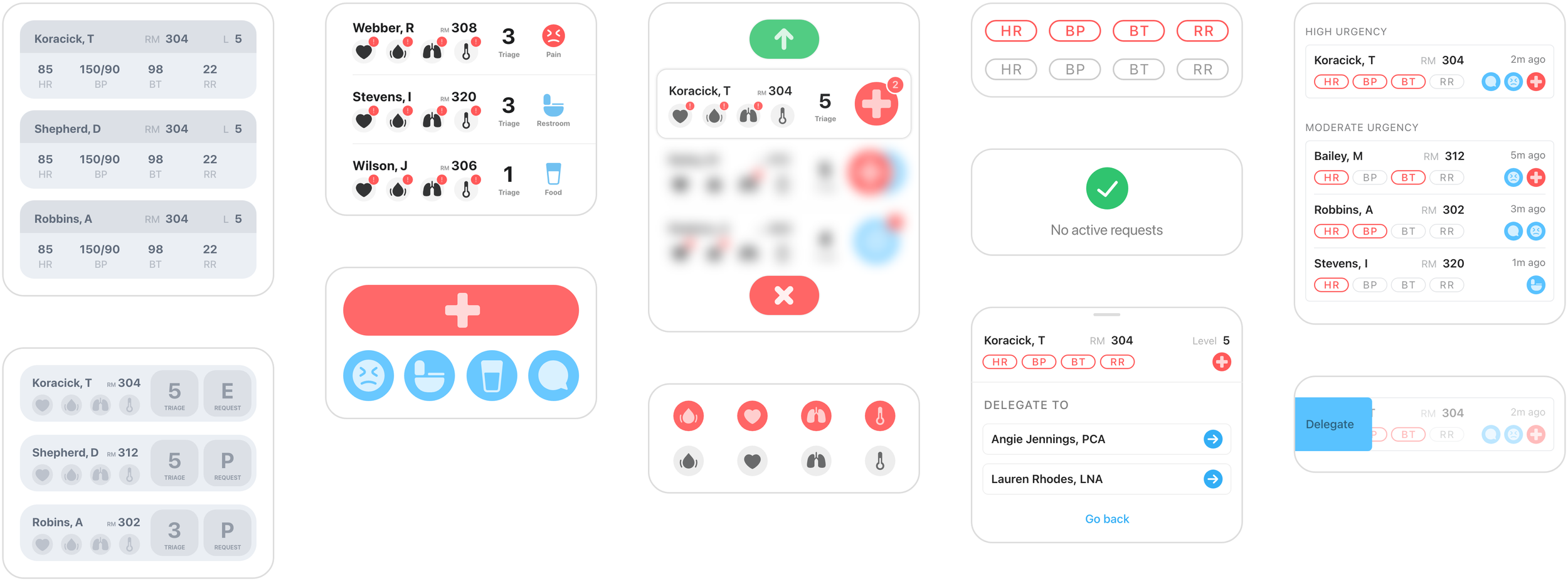
When developing an app intended for clinicians, I knew from my research that clinicians are stretched thin so adding work to their already packed shifts would be counterintuitive. That said, my objective was simple - to design a mobile app that displayed patient requests in an easy to digest manner. Through the process of iteration, I had an opportunity to put my work in front of a nurse to gather their impressions and feedback. Based on the feedback, the nurse shared that she wanted a means to delegate requests to other clinicians. I took this feedback to heart and began considering a workflow for this functionality.
System interaction
From request to resolution
The animation below illustrates how the Triage Care System is intended to function. The journey starts with the patient. On the patient’s hand-handle Triage remote, the patient can select from one of several illustrated button requests. Once selected, a clinician is notified on their Triage Care App. In the app, the clinician can see all their patients active requests. Along with seeing each patient and their request, the clinician can also see if there are any vital sign warnings. Seeing this will help the clinician better determine which of their patients will take priority. Should the clinician need to delegate requests, they can do so by swiping right over a request. From there, a flyover will appear for them to select a new clinician to take over the request. The clinician can clear completed requests by swiping left on any request.
Conclusion
Define. Prototype. Test. Repeat.
I learned so much about how clinicians operate, what their greatest pain points are, and how technology has impacted their respective roles. I found it particularly interesting during my research that clinicians tend to approach technology with cautious optimism as they worry it would add to their already busy workloads. With this, I knew it was key to user test often and adjust my approach as I got feedback. I ended up hosting a slew informal sessions with clinicians who offered insightful feedback in helping shape a solution that works best for their workflows.